
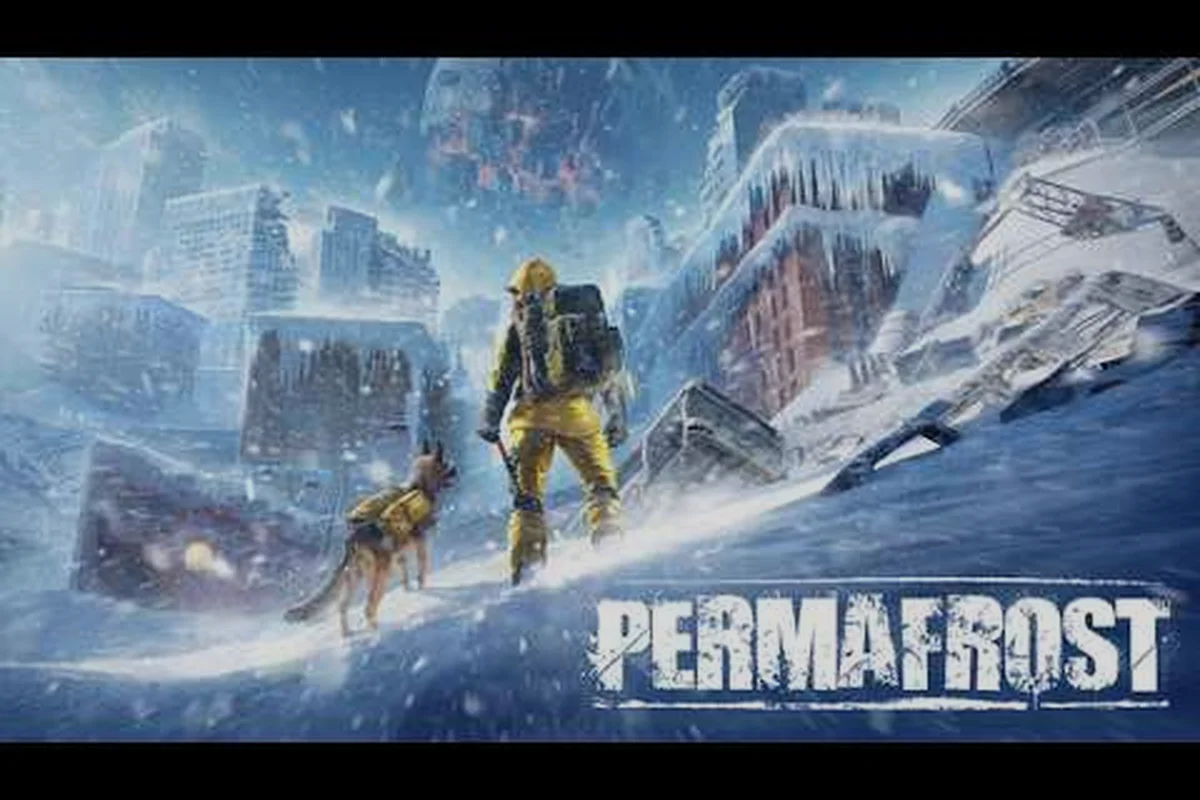
Understanding how permafrost abilities interact with your character build determines whether you survive the first blizzard or freeze before the first radio tower. The Rook starts as an engineer with almost no wilderness experience, which means every attribute point and trait choice carries outsized weight during the opening hours. This guide breaks down the ability framework, toughness scaling, Icarus traits, and the respec question so you can plan a coherent survival build instead of improvising into an early grave.
Permafrost Abilities and the Rook Framework
The core loop of Permafrost revolves around a character who is explicitly described on the official store page as a trained builder who can reconstruct infrastructure yet has almost no backcountry know-how. That tension defines the ability system: you are not a hardened survivor at the start, and the game does not pretend otherwise. Instead of a traditional class tree with branching specializations, Permafrost layers abilities across attribute-driven passives, situational survival traits, and equipment-dependent modifiers that emerge as you explore the frozen open world.
How Attributes Shape Your Rook
Attributes in Permafrost function as the underlying skeleton for every permafrost ability you unlock or improve. Because the game is still in Early Access as of October 2026, the exact numeric formulas remain partially opaque, but community testing has established a consistent pattern: raising an attribute does not grant a flashy active skill, but instead shifts thresholds for stamina drain, cold resistance, crafting speed, and carry weight. The Rook's engineering background means technical attributes tend to improve crafting and repair efficiency, while physical attributes govern sprint duration, melee effectiveness, and how long you can operate in extreme cold before hypothermia sets in.
| Attribute Cluster | Primary Effect | Secondary Effect | Early Game Priority |
|---|---|---|---|
| Physical | Stamina drain, melee damage | Carry weight, sprint speed | High |
| Technical | Crafting speed, repair quality | Trap efficiency, generator output | Medium |
| Survival | Cold resistance, hunger management | Detection range, harvest yield | High |
| Social | Companion commands, trade prices | Morale recovery, radio signal range | Low |
The table above reflects community-reported trends rather than datamined values, since the developers have not published an official attribute breakdown. Players consistently report that Survival and Physical clusters deliver the most immediate value in the first five hours, while Technical becomes more relevant once you start building permanent shelters and repairing advanced equipment. The Social cluster appears undertuned in the current Early Access build, though that may shift as co-op features expand.
The Icarus Trait Line
The Icarus reference in Permafrost is not a separate character but a trait line tied to risk-reward behavior. According to the official Toplitz Productions announcement, the game frames survival as a constant negotiation between bold exploration and cautious retreat, and the Icarus traits embody that tension. Players who push into whiteout conditions, climb unstable ice formations, or investigate distant radio signals gain access to Icarus-related bonuses that amplify movement speed and loot discovery, but those same traits increase the severity of environmental penalties when things go wrong.
The name itself is a deliberate mythological nod: Icarus flew too close to the sun, and in Permafrost the equivalent is pushing too deep into a storm because the potential reward looks irresistible. Icarus traits scale with risk exposure, meaning you cannot simply unlock them once and forget about them. The more dangerous your current situation, the stronger the trait bonus becomes, which creates a feedback loop that rewards aggressive play while punishing overconfidence. This is one of the few permafrost abilities that actively changes your decision-making rhythm rather than just adding passive numbers.
Permafrost Toughness and Survival Scaling
Toughness in Permafrost is the attribute cluster that most directly determines how long your Rook can function before the environment wins. Unlike hit points in a traditional RPG, permafrost toughness operates as a layered system: base health, cold resistance, injury resistance, and exhaustion threshold all feed into a single survival calculation. The Steam store page emphasizes that "the cold itself is your deadliest enemy," which means toughness is not just about taking hits from wildlife but about enduring the slow, grinding pressure of temperature loss.
How Toughness Interacts With Cold
The cold system in Permafrost does not kill you instantly. Instead, it applies escalating penalties: first a stamina regeneration debuff, then reduced crafting speed, then blurred vision, and finally health drain. Toughness raises the threshold at which each penalty tier activates, effectively buying you more time to find shelter or start a fire. Community reports suggest that a single point of toughness can extend safe outdoor exposure by roughly 30 to 45 seconds in mild cold, though the exact value varies by clothing, weather severity, and whether you are wet.
| Cold Tier | Penalty Without Toughness | Penalty With High Toughness | Survival Window |
|---|---|---|---|
| Mild | Stamina regen -15% | Stamina regen -5% | 8-12 minutes |
| Moderate | Crafting speed -25%, blur | Crafting speed -10% | 4-6 minutes |
| Severe | Health drain begins | Health drain delayed 60s | 2-3 minutes |
| Whiteout | Rapid health drain | Slower drain, clearer vision | 45-90 seconds |
The Whiteout tier is where toughness matters most. Players who neglect toughness report dying within a minute of entering a whiteout, while those who invest heavily can push through to reach a marked shelter or cave entrance. This is not a passive comfort stat; it is the difference between completing a radio signal quest and losing all progress to a respawn.
Toughness Versus Armor and Clothing
A common misconception among new players is that clothing replaces toughness. In practice, clothing provides flat cold resistance that reduces the rate of temperature loss, while toughness provides threshold extension that delays penalty activation. Both are necessary, but they solve different problems. A player with excellent clothing and zero toughness will still collapse quickly once the temperature drops past a certain point, because the penalty tiers activate at the same low threshold regardless of how warm the gear is.
The optimal approach, based on community testing, is to treat clothing as your first line of defense and toughness as your emergency buffer. Layered fur armor with high cold resistance will handle most routine exploration, but when a storm rolls in unexpectedly or you fall through ice, toughness determines whether you limp back to camp or freeze on the trail. For a deeper look at how to manage the early game survival loop, the beginner guide covers shelter placement and fire management in detail.
Permafrost Attributes in Practice
Attributes do not exist in a vacuum; they interact with equipment, companion behavior, and quest progression in ways that are not immediately obvious. The Rook's engineering background means certain attribute investments unlock crafting recipes or repair options that would otherwise remain hidden, while other investments primarily affect moment-to-moment survival. Understanding these interactions is the difference between a coherent build and a scattered collection of marginal upgrades.
Attribute Synergies With Equipment
Equipment in Permafrost carries its own modifiers, and those modifiers scale with your attributes. A high Technical score improves the durability of repaired items and reduces material costs, while a high Physical score makes melee weapons swing faster and reduces stamina drain during sprints. The synergy is multiplicative rather than additive, which means investing in an attribute that matches your preferred playstyle yields compounding returns.
| Playstyle | Primary Attribute | Secondary Attribute | Recommended Gear Focus |
|---|---|---|---|
| Aggressive Hunter | Physical | Survival | Spears, light armor, traps |
| Builder Engineer | Technical | Physical | Heavy tools, repair kits, generators |
| Cautious Scavenger | Survival | Technical | Insulated clothing, backpacks, flares |
| Co-op Support | Social | Survival | Signal boosters, shared shelters, medkits |
The Co-op Support build is currently the weakest option in solo play, since Social attributes primarily affect companion commands and trade prices, neither of which matters much when you are alone. However, in a four-player co-op session, a dedicated support Rook with high Social and Survival can keep the entire group alive through extended expeditions. The game's co-op focus, highlighted on the official Steam page, means this build may become more relevant as the developers add group-oriented content.
Respec Mechanics and Limitations
The question of whether you can respec in Permafrost is one of the most frequently asked topics in community discussions, and the answer is nuanced. As of the Early Access launch in October 2026, there is no free, unlimited respec system. Players report that certain story milestones unlock a limited respec option, but the exact trigger conditions remain inconsistent across playthroughs. Some players claim a respec becomes available after reaching the first major radio tower, while others report no respec option at all in their current save.
This inconsistency suggests the respec system is either partially implemented or gated behind conditions the community has not yet fully mapped. What is clear is that permafrost respec is not something you can rely on for early experimentation. The practical implication is that you should commit to an attribute direction within the first few hours and accept that some early mistakes will be permanent. If you want to understand the broader character progression context before committing, the Rook character guide explains the background and starting state in more detail.
Practical Build Planning for Permafrost Abilities
Given the uncertainty around respec, planning your permafrost abilities from the start becomes essential. The most successful community builds share a common philosophy: invest in survival fundamentals first, specialize later. This means prioritizing toughness and cold resistance in the opening hours, then branching into Technical or Physical attributes once you have a stable shelter and reliable food source.
Early Game Priority Order
The first ten hours of Permafrost are the most punishing, and your attribute choices during this window have the largest impact on whether you stick with the game or bounce off. Community consensus, gathered from Early Access player reports, points to a clear priority order:
-
First priority: Raise toughness enough to survive a moderate storm without immediate health drain
-
Second priority: Invest in Survival attributes to improve harvest yields and reduce hunger drain
-
Third priority: Add Physical points for sprint efficiency and melee defense against wolves
-
Fourth priority: Begin Technical investment once you have a permanent shelter to upgrade
-
Last priority: Social attributes, unless you are playing co-op from the start
This order reflects the reality that early deaths in Permafrost are almost always environmental, not combat-related. Wolves and other wildlife are dangerous, but the cold kills far more new players than any predator. Building your Rook to survive the environment first, then layering combat and crafting efficiency on top, gives you the best chance of reaching the mid-game where build variety opens up.
Mid-Game Specialization Paths
Once you have a stable base and reliable food, the build paths diverge significantly. The Builder Engineer path focuses on Technical attributes to unlock advanced crafting recipes and repair efficiency, which pays off when you start constructing multiple shelters across the map. The Aggressive Hunter path doubles down on Physical and Survival to enable long hunting expeditions deep into dangerous territory. Both are viable, but they require different equipment priorities and play patterns.
The Icarus trait line becomes particularly relevant in the mid-game, when you have enough toughness to survive the risks that Icarus bonuses encourage. Players who combine high toughness with Icarus traits report some of the most efficient loot runs in the game, because the movement speed bonus from Icarus stacks with the survival buffer from toughness to enable aggressive exploration that would kill a less prepared character. The key is understanding that Icarus is a multiplier on your existing capabilities, not a replacement for them.
How Permafrost Abilities Evolve in Early Access
Permafrost launched into Early Access on October 9, 2026, and the ability system is explicitly a work in progress. The developers at Toplitz Productions have indicated through their official announcement that survival mechanics will expand as the game approaches full release, which means the attribute and trait framework described here may shift. Players should treat current ability interactions as a baseline rather than a final design.
What the Community Has Verified
Despite the Early Access status, the community has already mapped several consistent behaviors. Permafrost toughness scaling appears stable across builds, with the penalty threshold extension functioning as described. Icarus traits trigger reliably when entering high-risk zones, though the exact bonus values remain unconfirmed. Attribute synergies with equipment are consistent enough to plan around, even if the underlying formulas are not public. The main uncertainty centers on respec availability, which varies between playthroughs in ways that suggest an unfinished implementation.
What to Watch for in Future Updates
The developers have not published a detailed roadmap for ability changes, but community expectations center on three areas: a formal respec system, expanded Social attribute functionality for co-op, and additional Icarus trait tiers for late-game risk-taking. Until those updates arrive, the safest approach is to build conservatively, invest in survival fundamentals, and treat any respec option that appears as a bonus rather than a planning assumption.
Frequently Asked Questions
What are the most important permafrost abilities for a new player?
Toughness and cold resistance are the most important permafrost abilities for new players because the environment kills faster than any enemy. Invest in Survival and Physical attributes early, build layered fur armor, and learn to read storm warnings before venturing far from shelter.
Does the Rook have a class system or skill tree?
The Rook does not have a traditional class system. Instead, permafrost abilities emerge from attribute clusters, situational traits like Icarus, and equipment modifiers. Your build is defined by where you invest attribute points and which gear you prioritize, not by selecting a class at character creation.
Can I respec my attributes in Permafrost?
Respec availability is inconsistent in the current Early Access build. Some players report a limited respec option after reaching certain story milestones, while others find no respec option at all. Do not plan your build around respec; commit to a direction early and treat any respec as a bonus.
How does the Icarus trait line actually work?
The Icarus trait line rewards risk-taking by granting movement speed and loot bonuses that scale with environmental danger. The more dangerous your current situation, the stronger the bonus, but penalties also increase when things go wrong. High toughness helps you survive the risks that Icarus encourages.
Is toughness more important than warm clothing?
Toughness and clothing solve different problems. Clothing provides flat cold resistance that slows temperature loss, while toughness raises the threshold at which penalty tiers activate. You need both, but toughness becomes critical in severe storms and whiteout conditions where clothing alone cannot save you.