
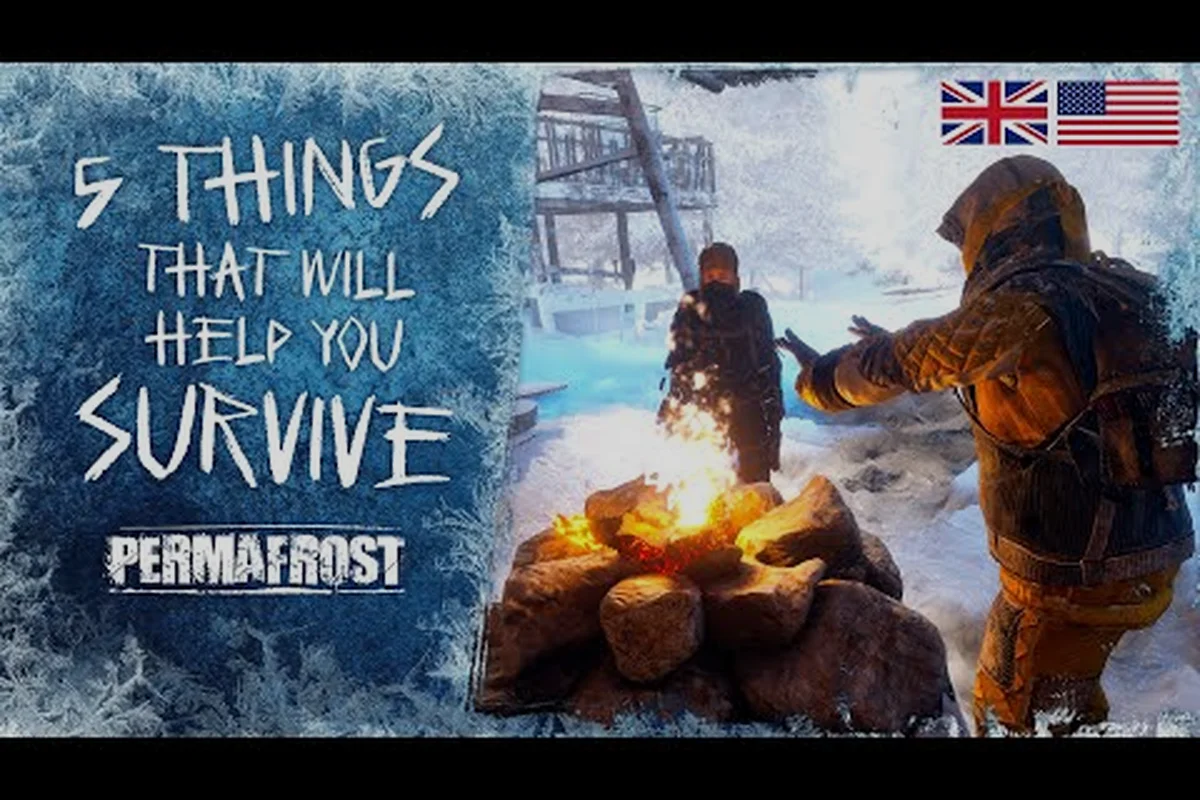
The opening hour of Permafrost decides whether you become a survivor or another frozen corpse in the endless winter. Your character is a Rook, an engineer with rebuilding skills but almost no wilderness experience, which means the game punishes hesitation and rewards immediate, deliberate action. This permafrost starter guide breaks down the critical first sixty minutes so you can secure shelter, manage body heat, and avoid the most common early deaths that wipe out new players before they ever see a second sunrise.
The First Hour's Three Vital Systems
The core survival loop in Permafrost revolves around three interconnected systems: Body Heat, Hunger, and Exhaustion. Unlike many survival sandboxes where food dominates early gameplay, the cold itself is your deadliest enemy, according to the official store page on Steam. Your Rook starts with minimal cold resistance, and the game's near-future Earth setting means ambient temperatures drop fast once the tutorial zone fades behind you.
The first hour is not about thriving. It is about stabilizing. You need to understand that every action—sprinting, chopping wood, even standing still in open wind—costs you something. The game tracks your Core Temperature separately from your surface warmth, and once your core drops below a critical threshold, your movement slows, your crafting fails more often, and hypothermia sets in within minutes.
| Survival System | Early Warning Sign | Fatal Threshold | First Hour Priority |
|---|---|---|---|
| Body Heat | Shivering icon, blue screen edges | Core temp below 30°C | Build shelter, craft basic clothing |
| Hunger | Stomach growl audio cue | Starvation damage over time | Scavenge canned food, cook raw meat |
| Exhaustion | Blurred vision, slower sprint | Collapse in open terrain | Rest near fire, avoid night travel |
| Hydration | Dry mouth indicator | Reduced stamina regen | Melt snow, boil water |
Community reports from the Early Access launch consistently highlight that new players die from cold exposure more than any other cause. The game does not hold your hand after the initial radio signal hook, and the transition from story introduction to open-world survival is abrupt. Your first priority should always be finding or creating a Windbreak because standing in exposed terrain drains your heat at roughly three times the rate of sheltered positions.
Reading the Environment Before You Move
Before you sprint toward the nearest structure, pause and scan the horizon. Permafrost buries most landmarks under snow, but certain visual cues tell you where safety lies. Look for Smoke Columns rising from chimneys, which indicate either a friendly checkpoint or a lootable cabin. Rock overhangs and dense pine clusters provide natural wind protection, while frozen lakes and open tundra are death traps during the first hour.
The game's weather system is not cosmetic. A Whiteout can roll in without warning, reducing visibility to a few meters and accelerating heat loss dramatically. If you see the sky turn milky and the wind audio spike, stop what you are doing and find cover immediately. Players who push through whiteouts to save time almost always end up disoriented, frostbitten, and dead within minutes.
Securing Your First Shelter and Warmth Source
Shelter in Permafrost is not a luxury. It is the difference between surviving your first night and freezing to death before dawn. The good news is that the game scatters abandoned structures across the starting region, and even a ruined cabin with three standing walls can save your life if you know how to use it. Your Rook's engineering background means you can repair and restore technology, but in the first hour, you will rely on basic construction.
The most reliable early shelter is a Lean-To built against a rock face or existing wall. It requires minimal materials—typically a few Salvaged Planks and Frozen Cloth—and provides enough wind protection to keep a small fire burning through the night. Do not waste time building a full cabin in your first session. The material cost is too high, and you will likely die before completing it.
| Shelter Type | Materials Needed | Wind Protection | Heat Retention | First Hour Viability |
|---|---|---|---|---|
| Rock Overhang | None (natural) | Moderate | Low | Excellent emergency option |
| Lean-To | 4 planks, 2 cloth | Good | Moderate | Best early investment |
| Ruined Cabin | Repair kit or 6 planks | Excellent | High | Great if found intact |
| Snow Cave | Shovel or digging tool | Good | Moderate | Risky, can collapse |
Once you have a shelter frame, your next move is fire. Fire serves three purposes in Permafrost: it raises your Core Temperature, it cooks food to remove parasites, and it keeps predators at bay during the night. You need Tinder, Kindling, and Fuel to start a fire, and the game does not let you skip any of these steps. Dry grass and birch bark work as tinder, while small sticks and split logs serve as kindling and fuel respectively.
Managing Fire Through Your First Night
A common mistake new players make is building a massive fire and then falling asleep next to it without managing the fuel. Fires in Permafrost burn down in real time, and if your fire dies while you sleep, you can wake up with severe hypothermia or not wake up at all. The solution is to gather at least three times more fuel than you think you need before nightfall, then set your Rook to sleep in short intervals so you can feed the fire between rest cycles.
The game also rewards positioning. Place your fire inside your shelter's wind shadow, not in the open. A fire exposed to wind burns fuel faster and provides less warmth. If you can find a Fire Ring or build one from stones, you gain a small efficiency bonus that compounds over a long night. Players who master fire management in the first hour rarely die from cold on subsequent nights.
Scavenging Priorities and Inventory Management
Your inventory in Permafrost is limited, and the game does not give you a magical backpack upgrade in the first hour. Every item you pick up competes for space, which means you need to make hard choices about what to carry. The most valuable early resources are not always the most obvious ones, and knowing what to leave behind is just as important as knowing what to grab.
Focus on Warmth Items first. Any piece of clothing, even a torn scarf or mismatched glove, provides a small heat bonus that stacks across your equipment slots. After warmth, prioritize Multi-Tools and Repair Kits because your Rook's engineering skills let you restore broken machinery that often contains better loot than what you find lying in the snow. Food and water matter, but they are heavier and less urgent in the first hour than securing your temperature.
| Item Category | Priority Level | Why It Matters | Common Locations |
|---|---|---|---|
| Clothing | Critical | Direct heat bonus, prevents frostbite | Abandoned cabins, corpses |
| Tools | High | Unlocks crafting, repairs, resource gathering | Workbenches, toolboxes |
| Medical Supplies | High | Treats frostbite, hypothermia, injuries | Bathroom cabinets, first aid kits |
| Food | Medium | Restores hunger, but heavy and perishable | Kitchens, supply crates |
| Weapons | Medium | Defense against wildlife, hunting | Gun racks, locked containers |
| Building Materials | Low early | Heavy, better gathered when needed | Construction sites, lumber piles |
The game's Canine Companion is not just a cosmetic pet. Your dog can carry a small amount of inventory, warn you about nearby predators, and provide a minor warmth bonus when you rest together. Keep your dog fed and close, because losing your companion in the first hour removes a significant survival advantage. The official Toplitz Productions announcement emphasizes that you face the frozen world "only with your canine companion at your side," which tells you how central this mechanic is to the early game.
Identifying High-Value Loot Locations
Not all buildings are worth entering. Some are empty shells that waste your time and expose you to cold, while others contain Stashed Supplies that can set you up for days. Learn to read the exterior of a structure before committing to a search. Buildings with intact roofs, closed doors, and visible storage containers are more likely to hold loot than collapsed ruins with open frames.
The best early loot locations in Permafrost tend to be Checkpoint Stations and Radio Towers, which often contain medical supplies, tools, and occasionally a working heater. These structures also serve as fast travel points once you restore their technology, which makes them doubly valuable. If you find a checkpoint in your first hour, prioritize looting and partially repairing it over building your own shelter from scratch.
Avoiding Early Deaths and Predator Encounters
Death in Permafrost is punishing, especially in Early Access where save points are sparse. You do not want to lose your first hour of progress to a wolf pack or a careless fall through thin ice. Understanding what kills new players most often helps you avoid those situations entirely, which is far more efficient than learning through repeated deaths.
The most common causes of early death, based on community reports from the launch window, are cold exposure, wolf attacks, and falls through weak ice. Cold exposure is the silent killer that creeps up on you while you are distracted by looting or crafting. Wolf attacks are more dramatic but avoidable if you watch for tracks and listen for howls. Thin ice is the sneakiest threat because it looks identical to solid ground until you are already falling.
| Threat | Warning Signs | Avoidance Strategy | Survival If Triggered |
|---|---|---|---|
| Hypothermia | Shivering, blue screen, slow movement | Stay sheltered, keep fire lit | Warm by fire, drink hot liquid |
| Wolf Pack | Howls, tracks in snow, glowing eyes | Avoid open terrain at night, carry torch | Fight or climb to high ground |
| Thin Ice | Darker ice patches, cracking sounds | Stick to shorelines, test with stone | Spread weight, crawl back |
| Starvation | Stomach growl, stamina drain | Eat regularly, cook meat | Eat high-calorie food immediately |
| Exhaustion | Blurred vision, slow sprint | Rest before nightfall | Sleep near fire, avoid travel |
Wolves in Permafrost are not mindless attackers. They circle, test your defenses, and strike when you show weakness. Carrying a Torch or staying near a fire makes you a less appealing target, while running away triggers their chase instinct. If a wolf does attack, fight back with whatever you have rather than fleeing, because the game's predator AI punishes prey behavior. The hunting and wildlife guide covers animal behavior in more depth, but for your first hour, avoidance is the best strategy.
Managing Your Health and Status Effects
Permafrost tracks multiple status effects that compound if left untreated. Frostbite reduces your dexterity and can permanently damage your extremities if you ignore it for too long. Hypothermia slows your movement and crafting speed, creating a death spiral where you cannot gather resources fast enough to warm yourself. Injuries from falls or animal attacks require bandages and rest to heal properly.
The game does not pause while you manage your inventory or read item descriptions, which means every second you spend sorting through your pack is a second your body heat drops. Learn to manage your status effects quickly and efficiently. Keep medical supplies in a dedicated inventory slot so you can access them without digging through your entire pack while a wolf circles or a storm closes in.
Building a Sustainable First Day Routine
Surviving the first hour is an achievement, but the goal is to build a routine that carries you through your first full day and night. The best Permafrost players treat the early game as a series of timed objectives rather than open-ended exploration. You need to accomplish specific tasks before the sun sets, and you need to know what to do when darkness falls.
Your first day should follow a rough schedule: spend the first twenty minutes finding shelter and gathering basic materials, the next twenty minutes securing food and water, and the final twenty minutes preparing for night. This is not a rigid script, but it gives you a framework that prevents aimless wandering, which is the most common way new players waste their first hour and freeze before they make real progress.
| Time Block | Primary Objective | Secondary Tasks | Success Indicator |
|---|---|---|---|
| 0-20 min | Find or build shelter | Gather planks, cloth, tinder | Sheltered position secured |
| 20-40 min | Secure food and water | Scavenge buildings, melt snow | At least 2 meals stored |
| 40-60 min | Prepare for night | Stockpile fuel, craft torch | Fire ready, fuel for 8+ hours |
| Night | Survive until dawn | Cook food, repair gear, rest | Alive at sunrise with no frostbite |
The beginner guide for Permafrost expands on these fundamentals with additional tips for your first few hours, but the core loop remains the same: shelter, warmth, food, rest. Once you have this routine down, you can start exploring further from your base and taking on more ambitious objectives like restoring technology or hunting larger game.
Expanding Beyond Your First Shelter
After your first night, you should have a basic shelter, a fire pit, and enough supplies to survive another day. The next step is expanding your operational range. Look for Checkpoint Stations that you can restore, because these serve as safe houses and fast travel points that make the rest of the game significantly more manageable. Your Rook's engineering background becomes more valuable here, as repairing these stations requires skills that other survival games do not offer.
The shelter and base building guide covers the long-term construction and fortification options in detail, but for now, focus on incremental improvements. Add a storage container to your shelter, build a proper bed instead of sleeping on the ground, and start stockpiling resources for future projects. Each small upgrade compounds into a survival advantage that makes the brutal Permafrost winter slightly more manageable.
Frequently Asked Questions
What is the fastest way to warm up in Permafrost?
Build a fire inside a sheltered position and stand close to it. The combination of fire warmth and wind protection raises your Core Temperature faster than either alone. Drinking hot liquid from melted snow provides an additional temporary warmth bonus that can save you in emergencies.
How do I find shelter in the first ten minutes?
Look for Smoke Columns on the horizon, which indicate occupied or abandoned structures. Rock overhangs and dense pine clusters work as emergency shelter if no buildings are nearby. A basic Lean-To requires only four planks and two cloth pieces, so gather those materials while you search.
Can I survive without fighting any animals?
Yes, avoidance is a viable first-hour strategy. Carry a Torch to deter wolves, stay near fire at night, and avoid open terrain where predators hunt. The game rewards caution over aggression in the early stages, and you can learn hunting later once you have better gear and a stable base.
What should I do if a whiteout hits while I am traveling?
Stop moving immediately and find any windbreak—a rock, a tree cluster, even a small depression in the snow. Build a fire if you have materials, or hunker down and wait it out. Pushing through a Whiteout causes rapid heat loss and disorientation, which almost always leads to death for new players.
How important is the canine companion in the first hour?
Your dog provides inventory space, predator warnings, and a small warmth bonus when resting together. Keep your companion fed and close, because losing your dog removes a significant survival advantage. The official Permafrost on Steam page emphasizes that you face the frozen world with your canine companion at your side, confirming how central this mechanic is to early survival.