
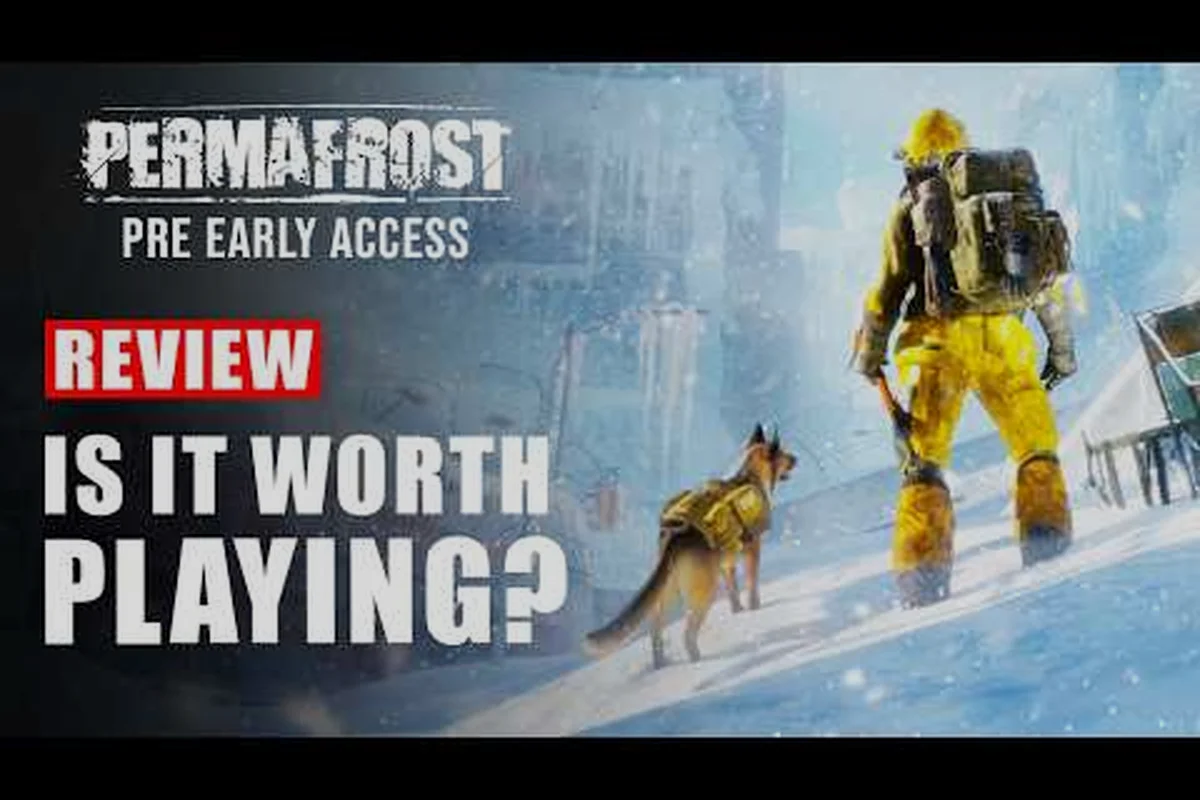
The question of whether permafrost is it worth playing in Early Access comes down to what you expect from a frozen survival sandbox. SpaceRocket Games has built a grounded, story-driven world where the cold itself is your deadliest enemy, but Early Access means incomplete systems, occasional bugs, and a content ceiling that some players will hit faster than others. This review breaks down exactly what you get for your money right now, so you can decide if the current build justifies a purchase or if you should wait for the full release.
What Permafrost Actually Delivers in Early Access
Permafrost drops you onto an Earth in the near future that entered a permanent freeze after the planet's cataclysm. You play as a Rook, an engineer with rebuilding skills but little wilderness experience, pulled into the frozen world after tracing a transmission from a friend long presumed gone. The premise is compelling because it gives your survival a narrative purpose rather than leaving you to wander aimlessly through snowdrifts.
The core loop revolves around extreme weather management, hunger, exhaustion, and scavenging. According to the official Steam page, the game emphasizes hunting scarce wildlife, setting traps, and restoring technology to stay alive. Your canine companion adds a layer of emotional weight and practical utility, helping you track prey and providing warmth during brutal nights.
What the Early Access build currently offers includes a story-driven open world with a main questline that introduces the frozen setting and your missing friend, crafting and repair systems for tools, clothing, and shelter, wildlife hunting with traps and ranged weapons, technology restoration mechanics that let you bring old-world machines back online, and a canine companion that assists with tracking and survival.
-
A story-driven open world with a main questline that introduces the frozen setting and your missing friend
-
Crafting and repair systems for tools, clothing, and shelter
-
Wildlife hunting with traps and ranged weapons
-
Technology restoration mechanics that let you bring old-world machines back online
-
A canine companion that assists with tracking and survival
The content depth is respectable for an Early Access title, but it is not a finished game. The main story arc is present but truncated, and several systems feel like vertical slices rather than fully realized mechanics. If you are asking whether permafrost is it worth playing right now, the answer depends heavily on your tolerance for incomplete features and your interest in watching a survival game evolve through updates.
Early Access Content Volume
The current build offers roughly 15 to 25 hours of core content if you focus on the main objectives and essential survival tasks. Players who enjoy base building, exploration, and hunting can stretch that to 40+ hours, but the endgame loop is thin. Community reports suggest that once you have a stable shelter, reliable food sources, and warm clothing, the challenge drops off significantly.
| Content Area | Current State | Hours of Play |
|---|---|---|
| Main story questline | Partial, ends at a cliffhanger | 8-12 hours |
| Base building and repair | Functional but limited blueprint variety | 10-15 hours |
| Hunting and trapping | Working, with basic AI behavior | 5-8 hours |
| Technology restoration | Present but shallow progression | 4-6 hours |
| Exploration | Large map with scattered points of interest | 10-20 hours |
The exploration loop is the strongest part of the Early Access build. The frozen world is visually striking, with abandoned structures, buried vehicles, and environmental storytelling that rewards players who venture off the beaten path. However, the points of interest are spread thin across a large map, which means long stretches of walking through identical snowfields between meaningful discoveries.
How Permafrost Compares to The Long Dark
Many players asking about permafrost is it worth playing are coming from Hinterland's The Long Dark, and the comparison is unavoidable. Both games share a frozen survival premise, but they diverge significantly in tone, mechanics, and philosophy. Understanding these differences is essential before you spend money on the Early Access build.
The Long Dark emphasizes pure survival simulation with minimal narrative hand-holding. Permafrost takes a more story-driven approach, giving you explicit objectives and a companion character. Neither approach is objectively better, but they appeal to different player preferences. If you want a sandbox where you create your own survival story, The Long Dark remains the stronger choice. If you want a guided experience with a clear narrative arc, Permafrost offers something distinct.
| Feature | Permafrost Early Access | The Long Dark |
|---|---|---|
| Narrative focus | Strong, story-driven with companion | Minimal, sandbox survival |
| Weather system | Harsh but less granular | Deep simulation with wind chill |
| Base building | Repair and restore structures | Limited to existing shelters |
| Wildlife AI | Basic hunting behavior | Complex predator-prey systems |
| Content maturity | Early Access, incomplete | Full release with expansions |
| Price point | Lower Early Access price | Higher, established title |
The weather system in Permafrost is punishing but less granular than The Long Dark's simulation. You will deal with blizzards, freezing temperatures, and exhaustion, but the game does not model wind chill, wetness, or layered clothing with the same depth. This makes Permafrost more accessible to newcomers but less satisfying for hardcore survival enthusiasts.
Where Permafrost Stands Out
Permafrost's technology restoration mechanic is genuinely unique in the survival genre. Instead of just crafting primitive tools, you can repair old-world machines like generators, heaters, and communication equipment. This gives the game a sense of progression that pure wilderness survival titles lack. The Toplitz Productions announcement highlights this feature as a core pillar of the experience, and it does differentiate the game from its competitors.
The canine companion is another differentiator. Your dog provides warmth, helps track wildlife, and adds emotional stakes to survival decisions. Losing your companion to a wolf attack or starvation is a genuinely affecting moment, and the bond system encourages you to prioritize the dog's needs alongside your own. No other major survival title currently offers this dynamic with the same level of integration.
If you want a deeper breakdown of how these two games stack up, the Permafrost vs The Long Dark comparison covers system requirements, performance, and settings in more detail. That guide is especially useful if you're weighing Permafrost's technology restoration loop against The Long Dark's more traditional bushcraft focus — the two titles diverge sharply in how they handle base building, heat management, and long-term resource scarcity, and the comparison table breaks down exactly where each game demands more of your time and patience.
Bugs, Performance, and Early Access Risks
The honest answer to whether permafrost is it worth playing in Early Access requires addressing the technical state of the build. Early Access titles vary wildly in polish, and Permafrost sits somewhere in the middle. The game is playable from start to current content end, but you will encounter bugs, performance drops, and unfinished systems.
Community reports from the first weeks of Early Access highlight several recurring issues: the cold-snap temperature system occasionally fails to register shelter bonuses inside crafted log cabins, the hunting rifle's durability drain outpaces the rate at which players can source weapon repair kits from airdrop caches, and the wolf-pack AI sometimes triggers simultaneous aggro from multiple predators when only one should detect your scent trail. These reports cluster around the mid-game transition—roughly the 10- to 15-hour mark—when players move from the starter region into the frozen industrial zones where most of the current story content lives.
-
Frame rate drops during blizzards and in dense building interiors
-
AI pathfinding problems with wildlife, especially wolves circling or getting stuck on geometry
-
Inventory UI lag when managing large stockpiles of resources
-
Save file corruption in rare cases, usually tied to building placement
-
Quest marker inconsistencies that require reloading to fix
None of these issues are game-breaking for most players, but they add friction to the experience. The developers have been responsive with hotfixes, and the patch notes tracker shows a steady cadence of updates since launch. However, you should expect the Early Access period to last at least 12 to 18 months based on the current roadmap.
Performance Benchmarks
Performance varies significantly depending on your hardware. The game is built in Unreal Engine, which means mid-range systems can run it at acceptable frame rates if you lower settings, but high-end GPUs are needed for stable 60 FPS at higher resolutions.
| Hardware Tier | Expected Performance | Recommended Settings |
|---|---|---|
| GTX 1060 / RX 580 | 30-45 FPS at 1080p | Low to Medium |
| RTX 2060 / RX 5700 | 45-60 FPS at 1080p | Medium to High |
| RTX 3070 / RX 6800 | 60+ FPS at 1440p | High |
| RTX 4080 / RX 7900 | 60+ FPS at 4K | Ultra |
The blizzard effects are the biggest performance killer. When a storm rolls in, particle density spikes and frame rates can drop by 30% or more even on capable hardware. The developers have acknowledged this and listed performance optimization as a priority for upcoming patches, but as of the current build, you should expect occasional stutters during weather events.
Who Should Buy Permafrost Right Now
The question of permafrost worth buying depends entirely on your player profile. This is not a game that will satisfy everyone in its current state, but it offers genuine value to a specific audience. Understanding which camp you fall into will save you from disappointment or a wasted purchase.
Buy Now If You Fit These Profiles
-
Survival genre enthusiasts who have played The Long Dark, Frostpunk, and similar titles and want something new
-
Early Access supporters who enjoy watching games evolve and providing feedback to developers
-
Story-driven survival fans who want narrative purpose in their survival loop
-
Dog lovers who want a meaningful companion mechanic in a survival game
-
Players with patience for bugs, incomplete systems, and content gaps
Wait for Full Release If You Fit These Profiles
-
Completionists who want a full story arc without cliffhangers
-
Performance-sensitive players who cannot tolerate frame drops or stutters
-
Value maximizers who want the most content per dollar spent
-
Hardcore simulation fans who demand deep weather, crafting, and wildlife systems
-
Players with limited gaming time who cannot afford to restart after save issues
The price point is a significant factor in the value equation. Early Access titles typically launch at a discount compared to their planned full release price, which means buying now locks in a lower cost. However, you are also paying to beta test an unfinished product. If the current content and feature set appeal to you, the discounted price makes the purchase more justifiable.
The Long Dark Player Perspective
If you are coming from The Long Dark and asking whether permafrost is it worth playing, the answer is nuanced. Permafrost is not a replacement for The Long Dark's deep survival simulation. It is a different take on the frozen survival genre, with more narrative structure and less mechanical depth. Some players will find this refreshing, while others will find it shallow.
The early game experience in Permafrost is genuinely compelling. The first few hours, when you are learning the systems, managing your warmth, and discovering the world, capture the same tension that makes The Long Dark engaging. The problem is that the mid-game and late-game content does not yet match the depth of the opening hours. Once you have a stable shelter and reliable food, the survival pressure eases and the unfinished systems become more apparent.
For a detailed breakdown of the opening hours and how to approach your first survival run, the Permafrost starter guide walks through the essential systems and early priorities. It covers the initial shelter search, how to manage your warmth meter before you find insulated clothing, and why prioritizing a cooking fire over exploration in the first two in-game days prevents most early deaths. The guide also explains how to read the frostbite risk indicator and which scrap metal nodes are worth harvesting first, so you do not waste daylight on low-yield salvage when the temperature is dropping.
The Roadmap and Future Potential
Any evaluation of permafrost worth buying must consider the development roadmap. SpaceRocket Games has outlined a clear vision for the full release, and the Early Access period is intended to fund and shape that vision. The question is whether the current trajectory justifies an early investment.
The developers have committed to a six-phase roadmap that runs through the full release window, with each phase tied to a specific pillar of the survival loop rather than vague "content drops." Phase one already delivered the improved cold-weather injury system and a rebalanced calorie burn rate, directly addressing two of the most common complaints in early Steam reviews. Phase two targets the crafting bench tier structure, where players have reported that mid-game progression stalls once you unlock the insulated shelter kit — the blueprint tree currently dead-ends there, leaving little incentive to keep scavenging frozen ruins. This phased approach matters for the "is it worth playing now" question because it tells you exactly which systems will deepen before you sink 30+ hours into a run.
-
Expanding the main story to a complete narrative arc
-
Deepening the crafting system with more blueprints and upgrade paths
-
Improving wildlife AI for more realistic hunting and predator behavior
-
Adding new regions to the frozen world map
-
Optimizing performance for lower-end hardware
-
Implementing community feedback on balance and quality of life
The community update cadence has been steady, with patches addressing critical bugs within days of discovery. This responsiveness is a positive sign for Early Access longevity, but it does not guarantee the final product will meet expectations. Many Early Access titles start strong and stall during development, so the risk is real.
Development Track Record
SpaceRocket Games is a relatively new studio, which means there is no long track record to evaluate. The team has been transparent about their development process and responsive to community feedback, which are positive indicators. However, the lack of a shipped full release means there is inherent uncertainty about the studio's ability to deliver on the roadmap.
| Development Signal | Current Status | Risk Level |
|---|---|---|
| Patch frequency | Regular hotfixes and updates | Low |
| Roadmap clarity | Clear but broad milestones | Medium |
| Community communication | Active on forums and social media | Low |
| Studio track record | No prior full releases | High |
| Content completion | Story arc incomplete | Medium |
The studio track record is the biggest risk factor. Without a shipped full release to evaluate, you are betting on the team's ability to execute their vision. This is not a reason to avoid the game entirely, but it is a reason to temper expectations and consider the Early Access price as a risk-adjusted investment.
Frequently Asked Questions
Is permafrost worth buying in Early Access right now?
If you enjoy story-driven survival games and can tolerate bugs and incomplete systems, the discounted Early Access price offers reasonable value for 15 to 25 hours of core content. Players who want a polished, complete experience should wait for the full release, which is likely 12 to 18 months away.
How does permafrost compare to the long dark?
Permafrost is more narrative-driven with a companion character and technology restoration mechanics, while The Long Dark offers deeper survival simulation with granular weather and wildlife systems. Neither is objectively better, but they appeal to different player preferences within the frozen survival genre.
What are the biggest problems with permafrost Early Access?
The main issues are frame rate drops during blizzards, basic wildlife AI, a truncated story arc, and thin endgame content. None of these are game-breaking, but they add friction and limit replayability. The developers have been responsive with patches, but the game remains incomplete.
How many hours of content does permafrost have right now?
The current build offers roughly 15 to 25 hours of core content focused on the main story and essential survival tasks. Players who enjoy base building, exploration, and hunting can stretch that to 40+ hours, though the endgame loop thins out considerably once you have stable shelter and food sources.
Will permafrost get a full release soon?
Based on the current roadmap and development pace, the full release is likely 12 to 18 months away. The developers have committed to expanding the story, deepening crafting, improving wildlife AI, and adding new regions, but Early Access timelines are inherently uncertain and subject to change.