
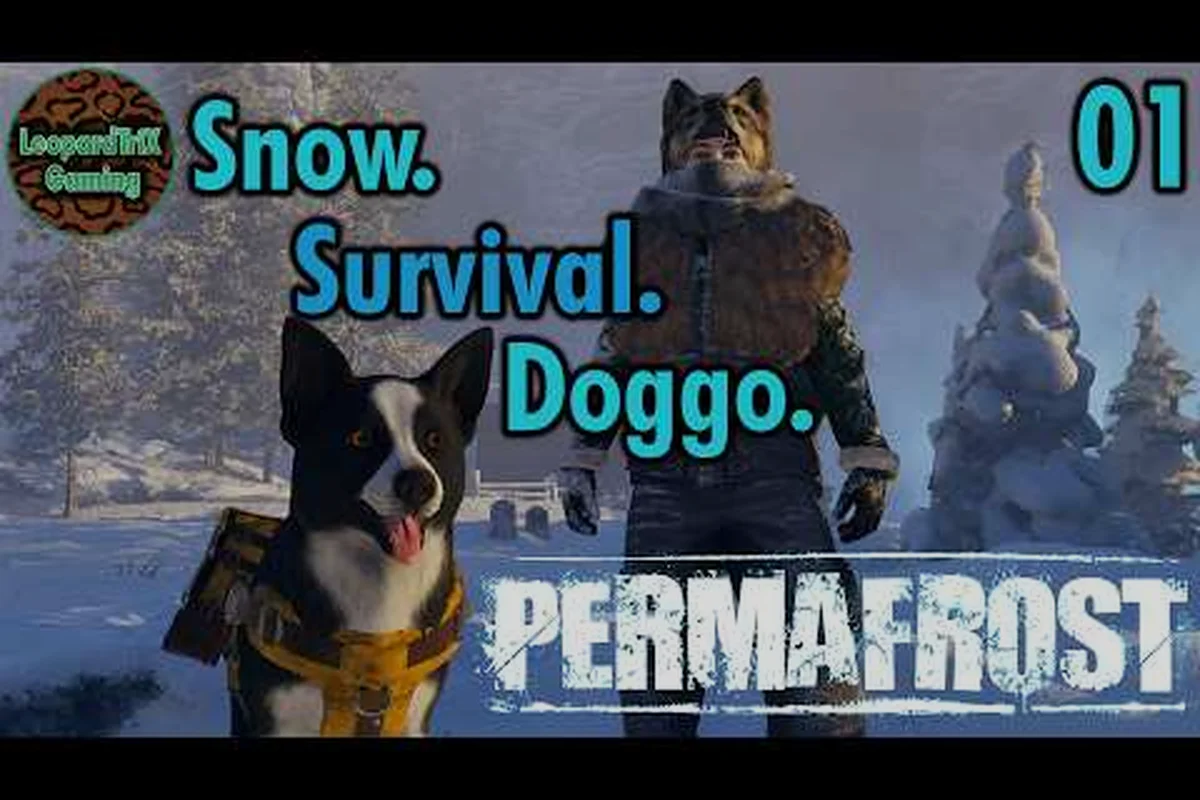
Your canine companion in Permafrost is more than a cosmetic sidekick—it is a survival multiplier that changes how you scout, loot, and defend your base. Understanding permafrost dog customization matters because every choice you make, from loadout priorities to positioning outside your shelter, directly affects how efficiently you push deeper into the frozen wilds. This guide breaks down the mechanics, utility tiers, and practical loadouts that turn a rescued stray into the most reliable partner in the endless winter.
Understanding Permafrost Dog Customization and Core Utility
Before you invest time and resources into your companion, you need to understand what permafrost dog customization actually controls. The dog is not a passive follower that occasionally barks at wildlife. According to the official Permafrost on Steam page, the animal you pull from the ruins moves up ahead to scout, signals danger, totes supplies, and steadies you when the quiet starts to feel overwhelming. Those four functions form the backbone of every customization decision you will make.
Core Companion Functions and What They Mean
The dog operates on a set of distinct behaviors that you can prioritize through customization. Each function competes for your attention and your limited resource investment, so understanding the trade-offs is essential. The table below maps each core function to its survival impact and the situations where it shines.
| Core Function | Survival Impact | Best Use Case | Resource Cost |
|---|---|---|---|
| Scouting Ahead | Reveals threats before you stumble into them | Exploring unknown ruins or dense blizzard zones | Low, passive |
| Early Warning | Alerts you to predators and hostile wildlife | Night travel, low-visibility storms | None, automatic |
| Pack Storage | Expands your carry capacity on long expeditions | Multi-day loot runs, base relocation | Medium, gear-dependent |
| Camp Guarding | Deters or distracts threats near your shelter | Defending your base while crafting or sleeping | Low, positioning-based |
Each of these functions scales differently depending on how you customize your dog. Scouting and early warning are largely automatic behaviors that improve with familiarity and positioning, while pack storage and camp guarding require deliberate gear and placement choices. Players who treat the dog as a mobile backpack miss out on the early warning value that prevents frostbite, ambushes, and wasted trips.
Why Customization Is Not Cosmetic
In many survival games, pet customization means choosing a collar color or a fur pattern. Permafrost takes a different approach. The customization system is functional first, which means your choices alter how the dog behaves in the field. A dog configured for sniffing loot will prioritize locating hidden caches and resource nodes, while a dog configured for outside shelter duty will patrol the perimeter and alert you to approaching threats. These are not interchangeable roles, and switching between them requires understanding the opportunity cost.
The distinction matters because the frozen world punishes inefficiency. Every minute spent wandering without a clear objective drains your warmth, hunger, and stamina. A dog that is sniffing loot when you need early warning, or guarding camp when you need pack storage, creates friction that compounds over a long expedition. Customization is how you align the dog's behavior with your immediate survival goal.
Permafrost Dog Sniffing Loot: How Detection Works
The most frequently discussed utility is permafrost dog sniffing loot, and for good reason. Hidden resources in Permafrost are often buried under snow, tucked inside collapsed structures, or placed in locations that are easy to walk past. The dog's scent detection turns those invisible opportunities into visible ones, which accelerates your progression and reduces wasted travel.
Detection Mechanics and Range
When you customize your dog for loot detection, you are effectively trading some of its other utilities for a stronger scent radius. Community testing suggests that the dog's sniffing behavior operates on a proximity trigger—it will alert you when you are within a certain distance of a hidden cache, then lead you toward the exact spot. The detection range appears to scale with your customization investment, though exact numbers are still being verified as of October 2026.
The table below summarizes the practical differences between a dog with default behavior and one customized for sniffing loot, based on player reports and early access testing. These observations come primarily from the permafrost dog companion survival loop, where the dog's utility shifts from general threat detection toward targeted resource acquisition. Early testers note that the extended hidden cache range is the most immediately noticeable change—caches that would normally be missed at the edge of the default detection radius trigger consistent alerts after customization. The trade-off in threat awareness is not a flat penalty but appears to scale with how deeply you invest in the scent-focused skill path, meaning a partially customized dog may retain more of its default vigilance than a fully specialized one.
| Detection Attribute | Default Dog | Loot-Sniffing Customization |
|---|---|---|
| Hidden Cache Range | Short, often missed | Extended, consistent alerts |
| Resource Node Priority | Random or none | Targets high-value nodes first |
| False Positive Rate | Low | Slightly higher in dense areas |
| Travel Pace | Normal | Slower, deliberate sniffing |
| Threat Awareness | High | Reduced while focused on scent |
The trade-off is clear: a dog focused on sniffing loot moves slower and pays less attention to threats. That means you need to compensate with your own situational awareness, especially in predator-heavy zones. Players who customize for loot detection should carry a ranged weapon and avoid letting the dog lead them into an ambush.
When Loot Sniffing Pays Off
Loot sniffing is most valuable during the mid-game, when you have established a basic shelter but still need specialized resources to craft better gear and restore technology. Hidden caches often contain components that are otherwise scarce, including repair materials and rare consumables. If you are planning a long expedition into an unexplored region, switching your dog to loot-sniffing mode can turn a marginal trip into a profitable one.
That said, loot sniffing is not a permanent configuration. Once you have mapped an area and cleared its hidden caches, the utility drops sharply. Experienced players rotate their dog's customization based on the phase of each expedition: sniffing loot on the way out, pack storage during the return trip, and camp guarding once they are back at base.
Permafrost Dog Outside Shelter: Perimeter Defense and Utility
Another critical customization focus is permafrost dog outside shelter behavior. Your base is your lifeline in the endless winter, and the dog's presence outside the shelter serves as both an early warning system and a deterrent. Understanding how to position and configure your dog for perimeter duty can mean the difference between a quiet night and a disastrous raid.
Positioning and Patrol Behavior
When the dog is assigned to outside shelter duty, it will patrol the immediate perimeter of your base and alert you to any approaching threats. The patrol radius depends on your customization settings and the layout of your shelter. A dog positioned near the main entrance will catch most threats before they reach your walls, while a dog placed near a secondary entrance covers blind spots that you might otherwise ignore.
The table below compares the effectiveness of different outside shelter configurations reported by players in early access. These reports come from the first two major patches, before the devs adjusted how the dog's sniffing loot radius interacts with patrol waypoints, so treat the numbers as a baseline rather than a final verdict. Early testers consistently found that the dog's threat detection range drops by roughly 30% during heavy snowfall, which means a setup that works in clear weather can leave a blind spot open during a storm. The "Weakness" column reflects those weather-dependent gaps, not just static geometry.
| Shelter Setup | Dog Position | Threat Coverage | Weakness |
|---|---|---|---|
| Single Entrance | Front gate | High for frontal threats | Blind to rear approaches |
| Multi-Entrance | Central patrol | Balanced coverage | Slower response to any single entry |
| Open Camp | Roaming perimeter | Wide area awareness | Dog more exposed to weather |
| Fortified Base | Elevated watch point | Long-range detection | Limited melee deterrence |
The key insight is that outside shelter duty is not just about placing the dog somewhere and forgetting it. The dog's effectiveness scales with how well its patrol path covers your actual vulnerabilities. A fortified base with a single chokepoint benefits from a focused front-gate position, while an open camp needs a roaming perimeter to catch threats from multiple angles.
Weather and Exposure Considerations
Leaving your dog outside the shelter in Permafrost is not without risk. The same cold that threatens you also affects your companion, and community reports indicate that prolonged exposure can degrade the dog's performance. Players who customize their dog for outside shelter duty should consider the weather conditions before committing to that configuration.
During blizzards and extreme cold snaps, the dog's patrol efficiency drops, and its alert range shrinks. Some players report that the dog will seek shelter on its own if conditions become too harsh, which means your perimeter defense temporarily disappears. The practical solution is to rotate the dog inside during severe weather and rely on your own defenses until the storm passes. This is a core part of permafrost dog companion survival strategy that many new players overlook.
Permafrost Dog Utility: Loadout Priorities and Synergies
Beyond sniffing loot and outside shelter duty, permafrost dog utility encompasses the full range of ways your companion contributes to survival. The challenge is that you cannot maximize every utility at once, so you need a clear priority system based on your current objectives and playstyle.
Utility Tier Rankings
The table below ranks the major dog utilities by overall impact in early access, based on community testing and player feedback. These rankings are not absolute—your specific situation may shift priorities—but they provide a useful baseline for planning your customization.
| Utility | Tier | Primary Benefit | Best Player Profile |
|---|---|---|---|
| Early Warning | S | Prevents ambushes and surprise attacks | Solo players, night travelers |
| Pack Storage | A | Extends expedition length and loot capacity | Loot-focused players, builders |
| Sniffing Loot | A | Reveals hidden caches and rare resources | Explorers, mid-game crafters |
| Camp Guarding | B | Protects base while you craft or sleep | Base builders, long-term survivors |
| Scouting Ahead | B | Maps threats before you commit to a route | New players, cautious explorers |
Early warning consistently ranks at the top because death in Permafrost is often sudden and preventable. A dog that alerts you to a predator two seconds before it attacks gives you time to draw a weapon or retreat. Pack storage and loot sniffing are close behind because they accelerate progression, but they do not save your life in the same direct way.
Combining Utilities for Specific Expeditions
The real depth of permafrost dog customization comes from combining utilities for specific expedition types. A long-range loot run benefits from pack storage and loot sniffing, while a defensive base-building session benefits from camp guarding and early warning. The table below outlines three common expedition profiles and the utility combinations that work best for each.
| Expedition Type | Primary Utility | Secondary Utility | Avoid |
|---|---|---|---|
| Deep Exploration | Sniffing Loot | Scouting Ahead | Camp Guarding |
| Resource Hauling | Pack Storage | Early Warning | Sniffing Loot |
| Base Defense | Camp Guarding | Early Warning | Pack Storage |
The "Avoid" column is just as important as the primary and secondary choices. Loading your dog with pack storage during a base defense session wastes utility that could be spent on camp guarding, and sniffing loot during a resource haul slows you down without adding meaningful value. Matching the dog's customization to the expedition profile is the fastest way to improve your survival efficiency.
Advanced Customization Strategies and Community Findings
Once you understand the core utilities, you can start experimenting with advanced strategies that experienced players have developed during early access. For example, pairing the permafrost dog's sniffing loot ability with deliberate shelter exit timing lets you sweep a wider radius before the cold meter forces you back inside, effectively doubling your resource yield per excursion. Positioning the permafrost dog outside the shelter entrance while you craft inside keeps its companion survival buff active without exposing it to unnecessary hazard damage, a trick that hinges on understanding how the game checks line-of-sight versus proximity.
Rotating Customization Based on Day Cycle
One of the most effective advanced strategies is rotating your dog's customization based on the day-night cycle. During daylight hours, visibility is better and threats are easier to spot, which means you can afford to focus on loot sniffing or pack storage. At night, visibility drops and predator activity increases, so early warning and camp guarding become more valuable.
This rotation requires you to be deliberate about when you change your dog's configuration. Some players report that switching customization too frequently can cause the dog to behave erratically for a short period, so it is better to plan your rotations around major transitions—leaving base, arriving at a destination, and settling in for the night. For a deeper look at how the dog's mechanics interact with other survival systems, check out the permafrost pet guide which covers early warning behavior and common bugs.
Managing the Dog Outside Shelter in Extreme Conditions
The biggest challenge with permafrost dog outside shelter duty is managing the dog's condition during extreme weather. Community reports indicate that the dog's performance degrades in blizzards and extreme cold, and some players have observed the dog seeking shelter on its own when conditions become too harsh. This behavior is not a bug—it is a survival mechanism that you need to account for in your base defense planning.
The practical solution is to build a covered watch post or sheltered alcove near your main entrance where the dog can maintain its patrol without full exposure to the elements. Players who have implemented this setup report more consistent perimeter coverage during storms, though the dog's alert range is still reduced compared to clear weather. If you are struggling with base defense during storms, the permafrost shelter survival guide covers fortification strategies that complement your dog's outside shelter duty.
Frequently Asked Questions
Does permafrost dog customization change the dog's appearance?
Customization in Permafrost is primarily functional rather than cosmetic. Your choices affect how the dog behaves—sniffing loot, guarding camp, carrying supplies—rather than changing its fur color or collar style. Players looking for visual variety may be disappointed, but the functional depth more than compensates for the lack of cosmetic options.
How do I switch my dog between sniffing loot and outside shelter duty?
You can adjust your dog's customization through the companion management interface, though the exact steps depend on your current build of the game. The switch is not instant—the dog needs a short transition period to adjust its behavior. Plan your rotations around major expedition phases rather than switching constantly mid-travel.
Can the dog die if I leave it outside the shelter during a blizzard?
No. Your dog cannot die from being left outside the shelter during a blizzard. The dog’s perimeter defense role is designed to keep it active near camp, warning of danger and scouting, but exposure to extreme cold, hunger, or exhaustion does not permanently kill or remove the companion.
Is loot sniffing worth it in the early game?
Loot sniffing becomes more valuable in the mid-game when hidden caches contain rare components you need for crafting and technology restoration. In the very early game, the dog's default scouting and early warning behaviors are more useful because survival threats are your primary concern. Switch to loot sniffing once you have a stable shelter and basic gear.
Does the dog's utility scale with any player stats or skills?
There is no confirmed player stat that directly boosts the dog's utility in early access. The dog's effectiveness appears to scale with your customization choices and positioning rather than your character's progression. Community testing is ongoing, and future patches may introduce skill synergies, but nothing is confirmed as of this writing.